product - service system design
GreenLight – Sustainability
university
TU Delft, the NL
ROLE
Researcher, Designer
YEAR
Dec 2021 - Jan 2022
team
Cai Cai, Jayneel Soni, Bram Diem, and Neha
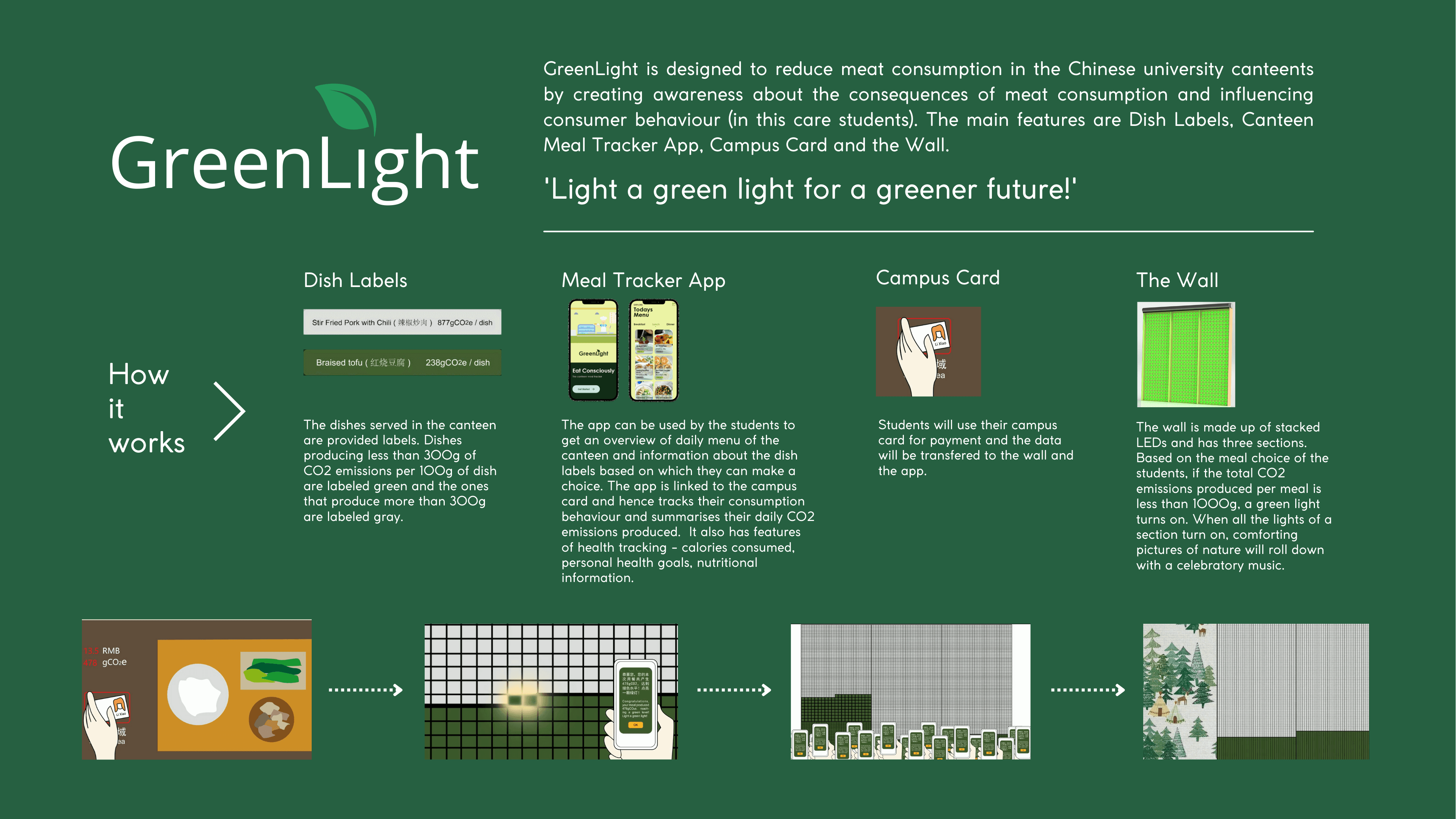
Designing for behaviour change in Chinese university canteens to make more sustainable food choices.
About
Goal
Outcome
process
To start off the project, my team and I researched about Environmental Sustainability. This research was done not only to increase our overall understanding of the issue but also to identify those areas which are most pressing to design for - which were researched more in detail. There are three aspects to sustainability: environmental, economic and social. A systemic change that addresses all three aspects of sustainability is necessary but for the scope of this project, we will focus on Environmental Sustainability. We researched about three most polluting industries - materials, transport and food. We identified the key areas in each domain.
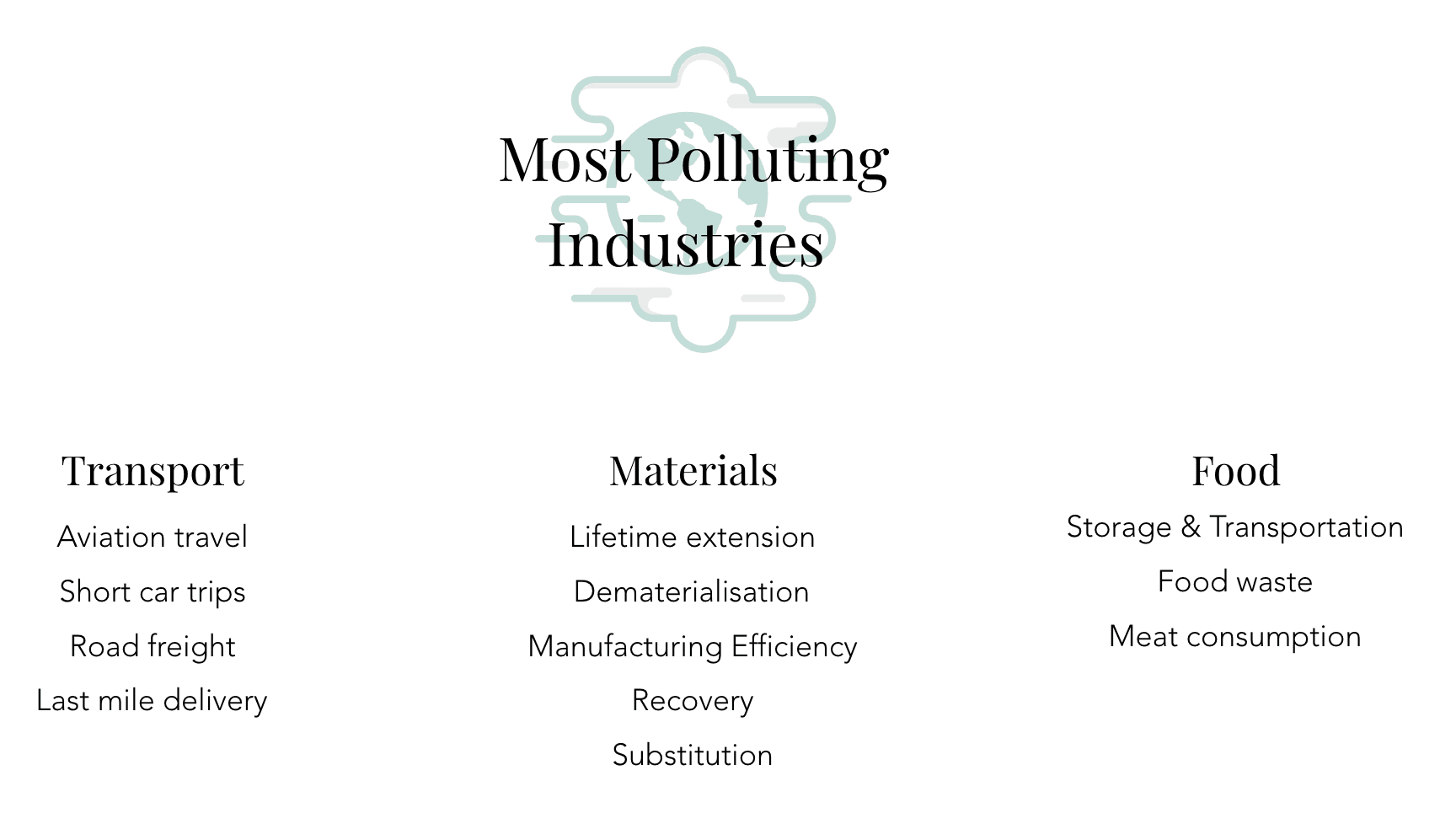
Food systems are important in all societies and are essential for long-term development, but their complexity necessitates a more holistic and integrated approach. The way we shop and eat has a big environmental impact. Hence we performed further research in the Food Industry and discovered three main directions: unsustainable diet (meat intake), food storage and transportation, and food wastage. We chose to study the issue of meat consumption because emissions of livestock industry are huge and awareness about the impact of meat is low.
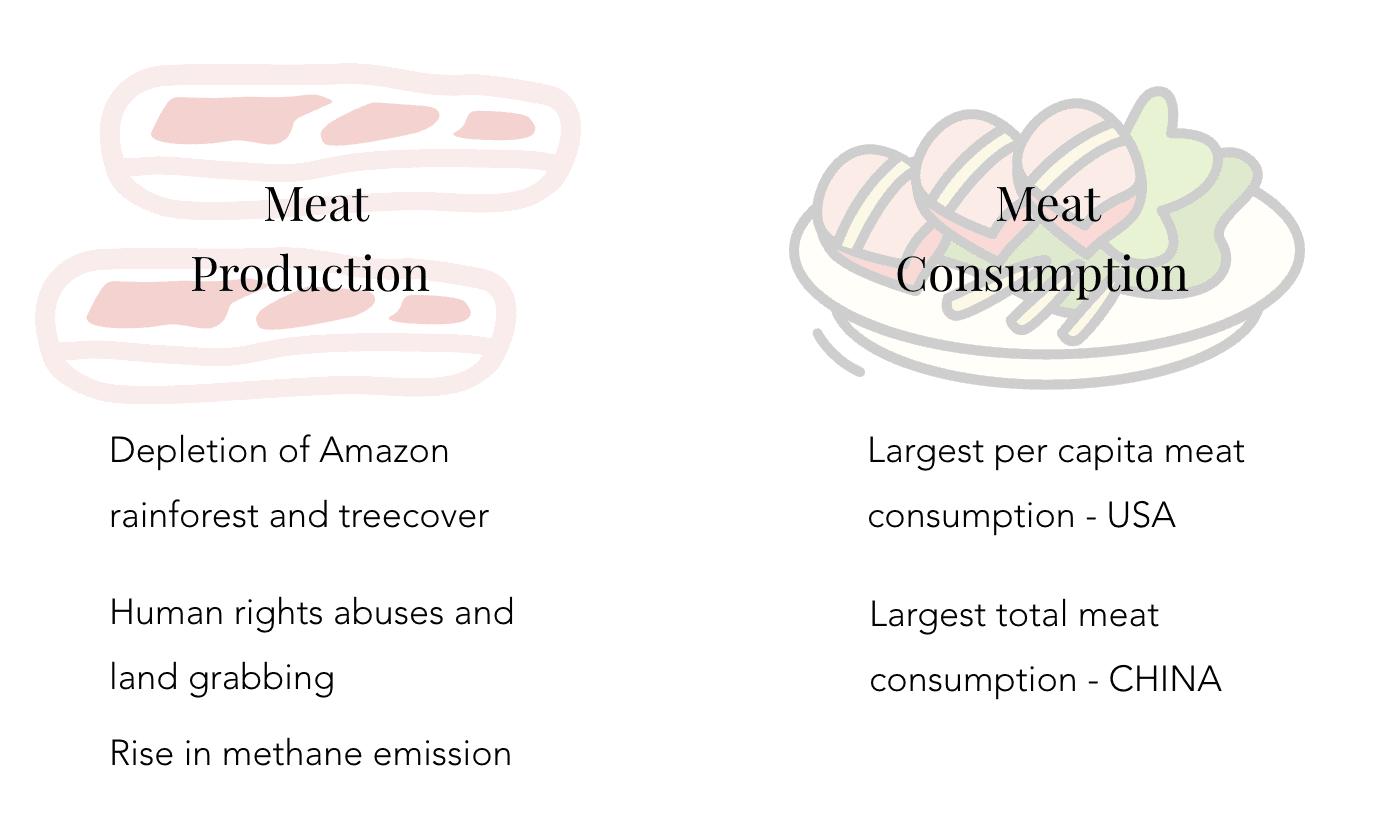
China has the biggest total meat consumption and this will only rise. China's past decades are marked by two large demographical developments: a rapid growth of population coupled with a large increase in GDP per capita. Thus middle class is rapidly growing driving up the per capita meat consumption. Thus we chose to design for China. To understand the role of meat in China, we studied the Chinese cuisine, types of meat in the Chinese meat industry, issues related to meat safety and quality, and the role of resources and trade in the meat industry.
Research on Consumer Behavior reveals that individual consumption choices are having an unprecedented effects on the environment. The following the the latest trends in Consumer Behaviour.
18-34 year olds are most likely to cut down meat consumption.
Reducing meat and animal product consumption is one the most prominent lifestyle changes.
Skepticism on the effects of reduction of meat consumption on the environment.
People from all income brackets are reducing meat and animal product consumption.
SHIFT is a framework which proposes that when a message or scenario leverages the 5 psychological aspects shown below, consumers are more likely to participate in pro-environmental behaviour. We referred to the SHIFT framework during Ideation to direct us on ways to influence consumer behaviour to reduce meat consumption.
Social norms
Social identities
Social desirability
Discontinuity to change bad habits
Penalties
Making it easy
Prompts, incentives, and Feedback
Negative emotions
Positive emotions
Information, learning, and knowledge
Eco-labeling
Framing
Matching temporal focus
Local and proximal impacts
Concrete communications
Encourage desire for intangibles
Focusing our design on the Chinese Population, we needed a more specific target group. We chose to design for Chinese Students because of their ability to have a longer lasting impact, they are more flexible in their habits, and are more likely to reflect critically on their habits. In order to gain an understanding of the lifestyle, values and diet of Chinese students we conducted interviews of 5 Chinese students.
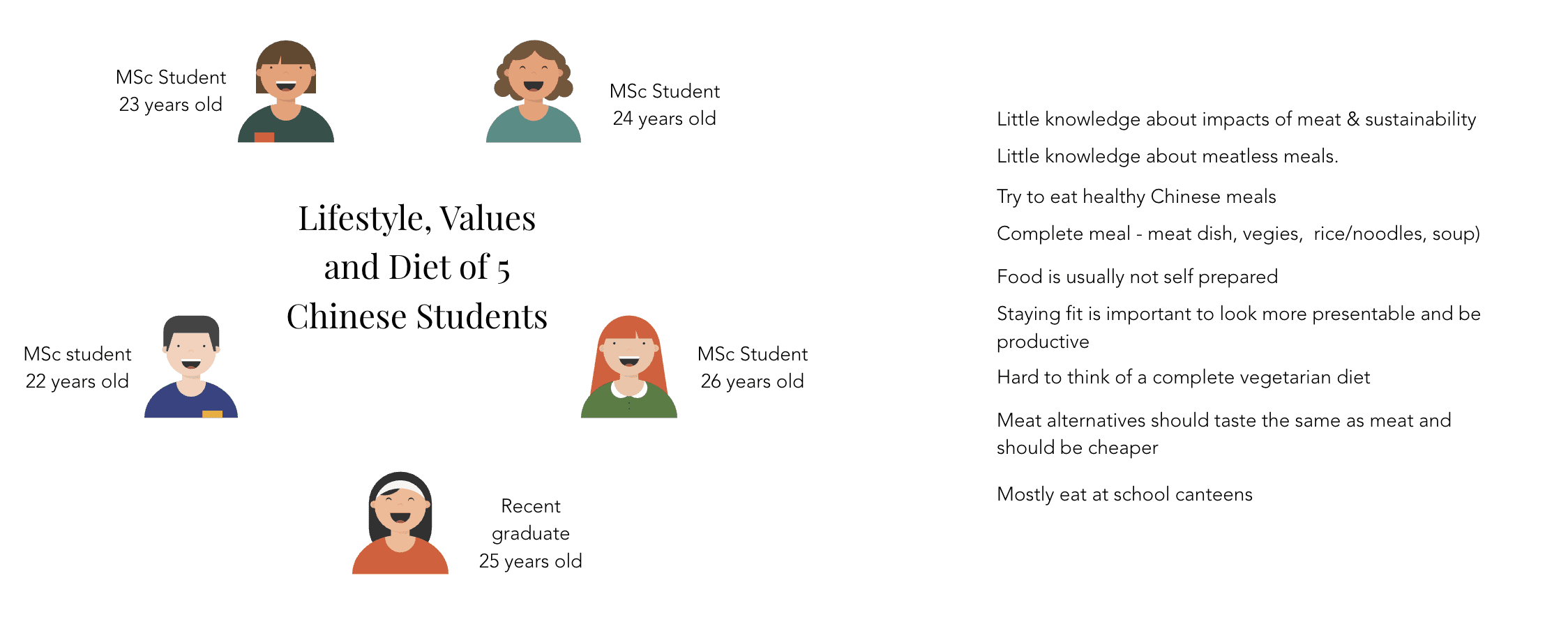
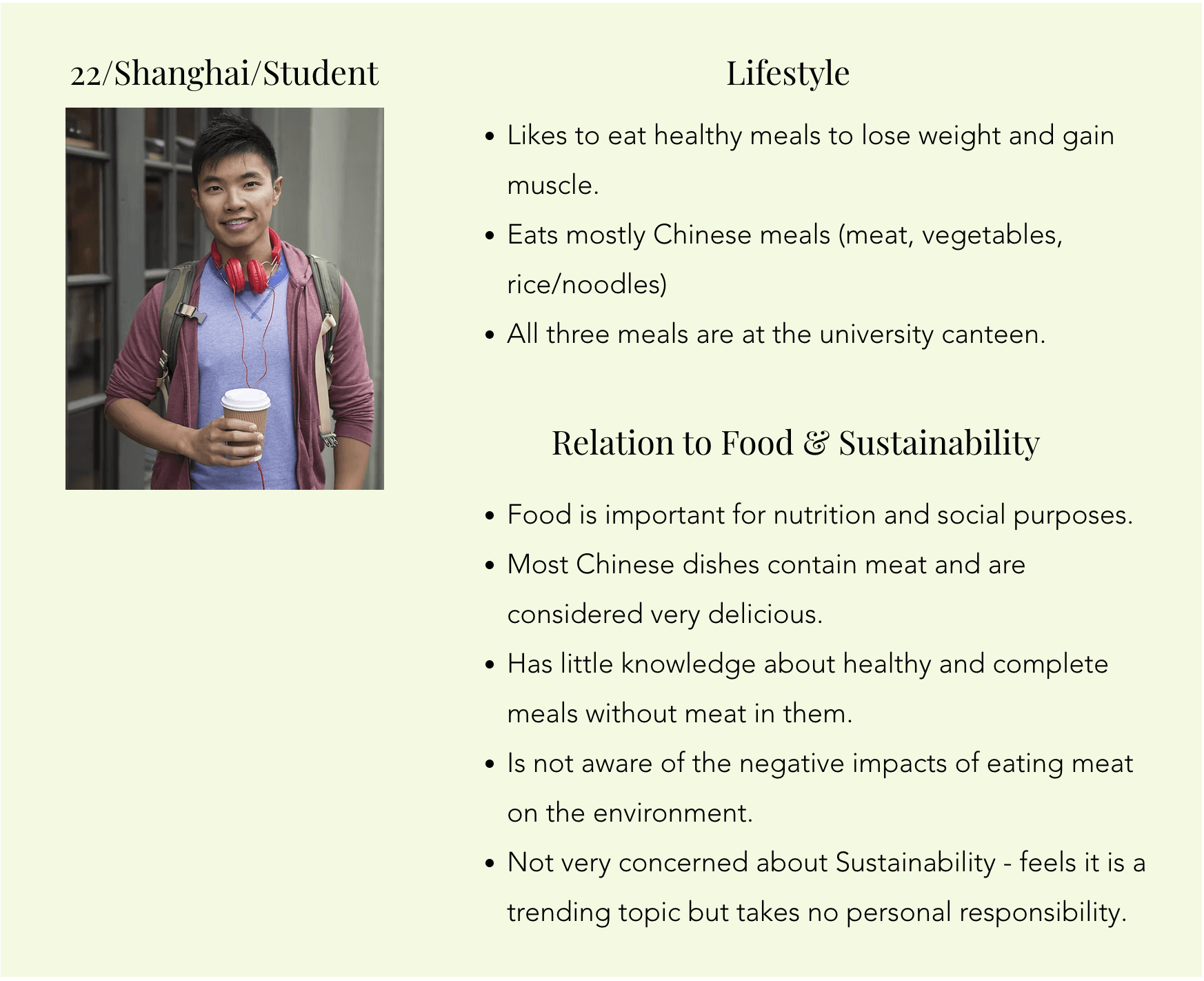
The results on the interviews are summarised into a persona - a fictional person that represents the user group in such a way that they can be designed for.
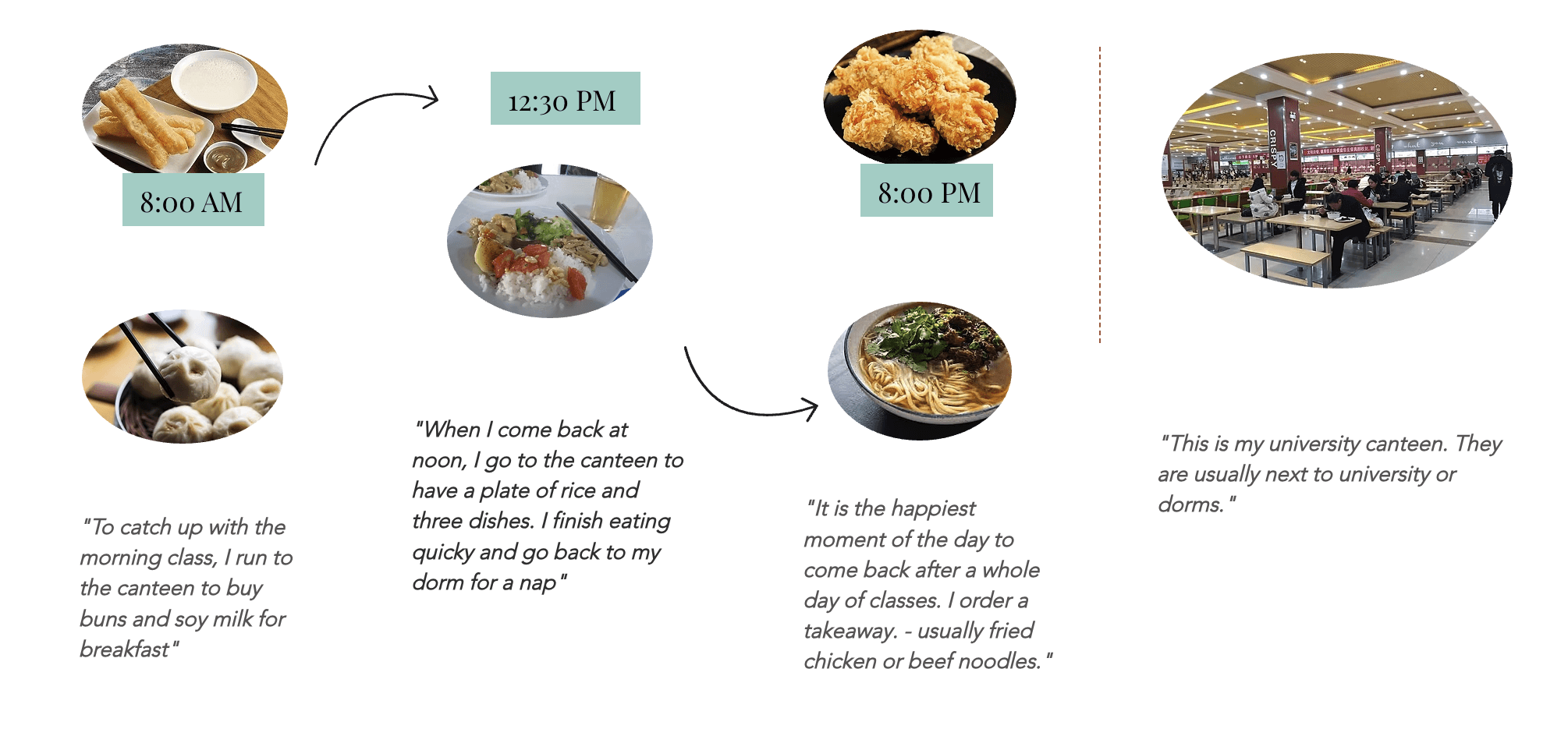
Chinese university/school canteens are large and are designed to serve thousands of students regularly. This is the primary reason for our focus on them. Chinese students generally live and eat on the campus, making it the ideal place to attempt raising an awareness and motivating the young Chinese populace to switch to more sustainable eating habits. We studied the environment of Chinese university canteen and collected data of total number of universities and canteens in China.
To develop a deeper understanding of the target group we were designing for and understand their needs, we worked on an Empathy Map. The experience of a Chinese student in a Chinese canteen is summarised in an Empathy Map as what he sees, says and does, hears, thinks and feels. The pains represent the fears, frustrations and obstacles. The gains represent the wants, needs, success and goals.
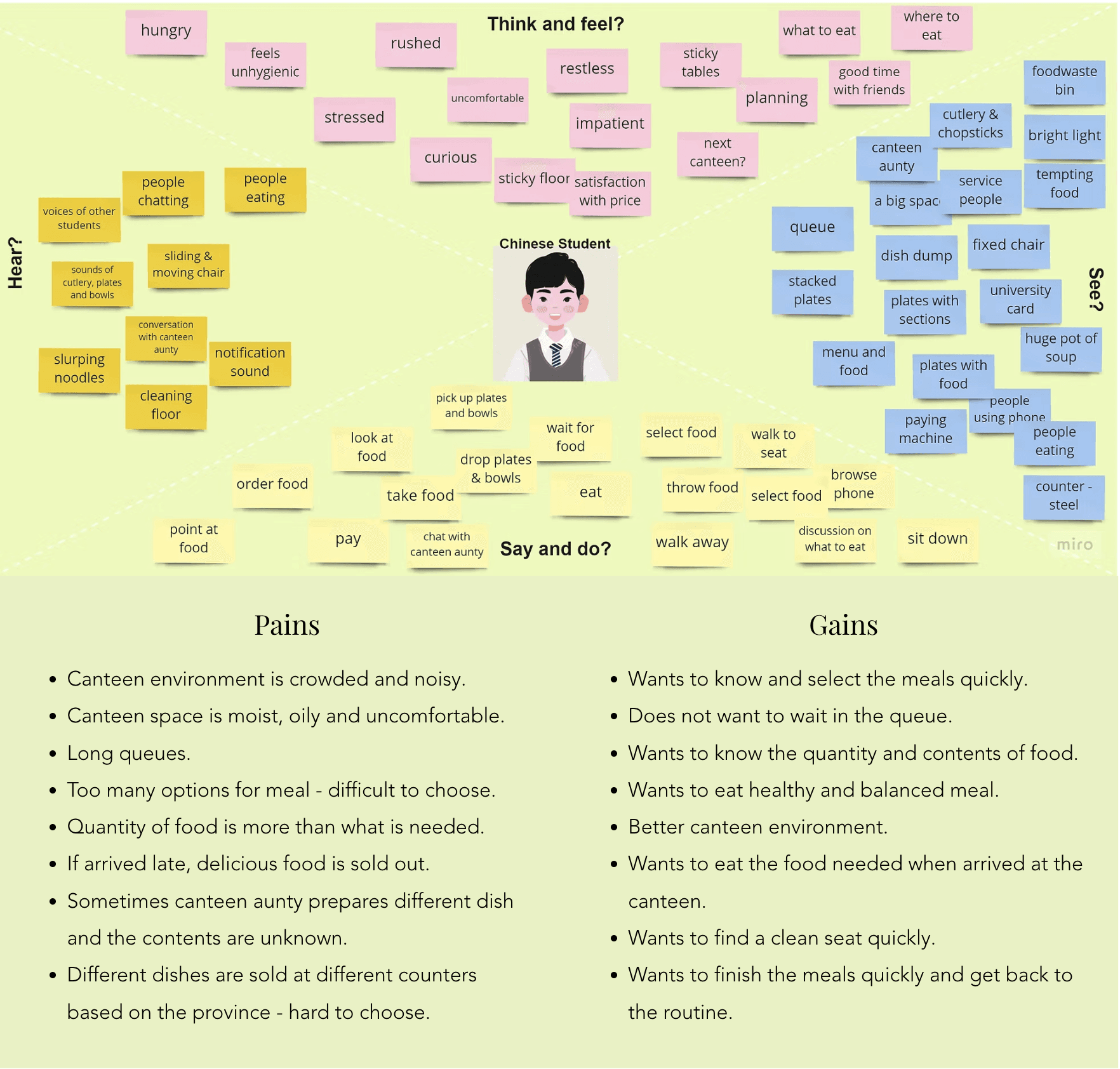
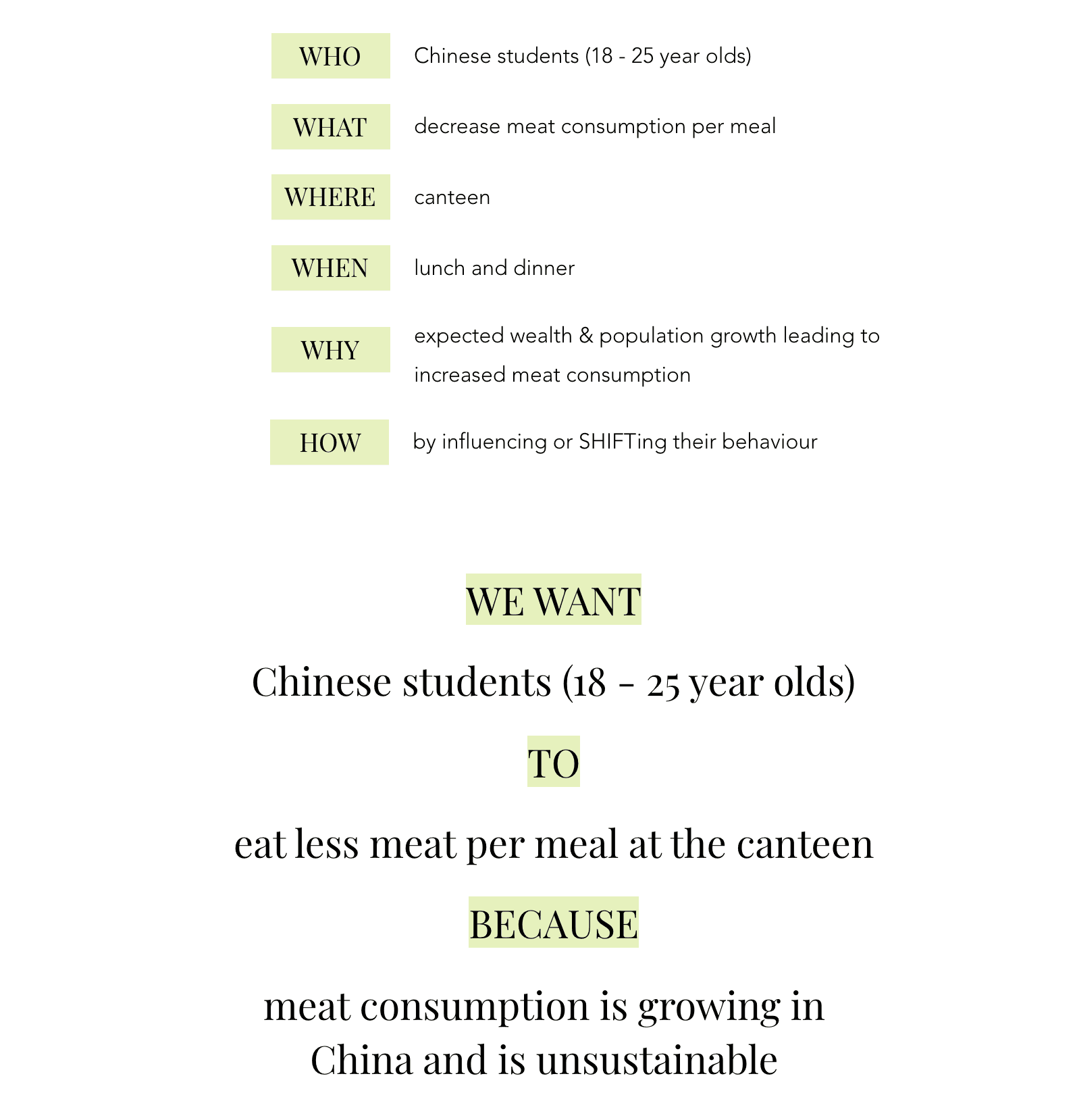
We set the design challenge and started working on the programme of criteria (list of requirements) for our design solution. Various demands and wishes were listed in the programme of criteria.
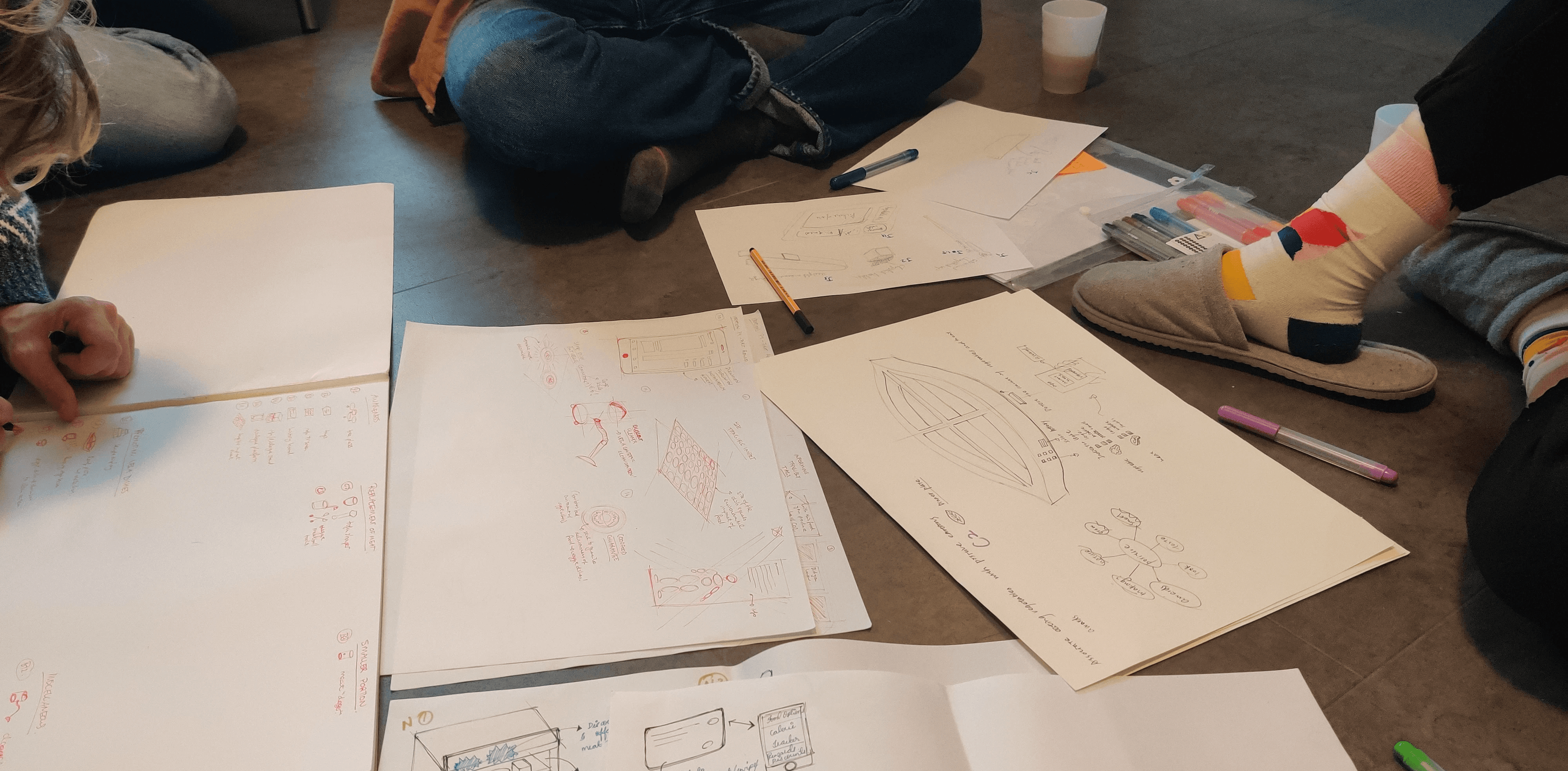
Next, we started ideation. After the first round of ideation which was done individually, the ideas were clustered into 5 categories:
Promoting Vegetarian Dishes
Replacement of Meat, Awareness
Smaller Portion of Meat and Miscellaneous
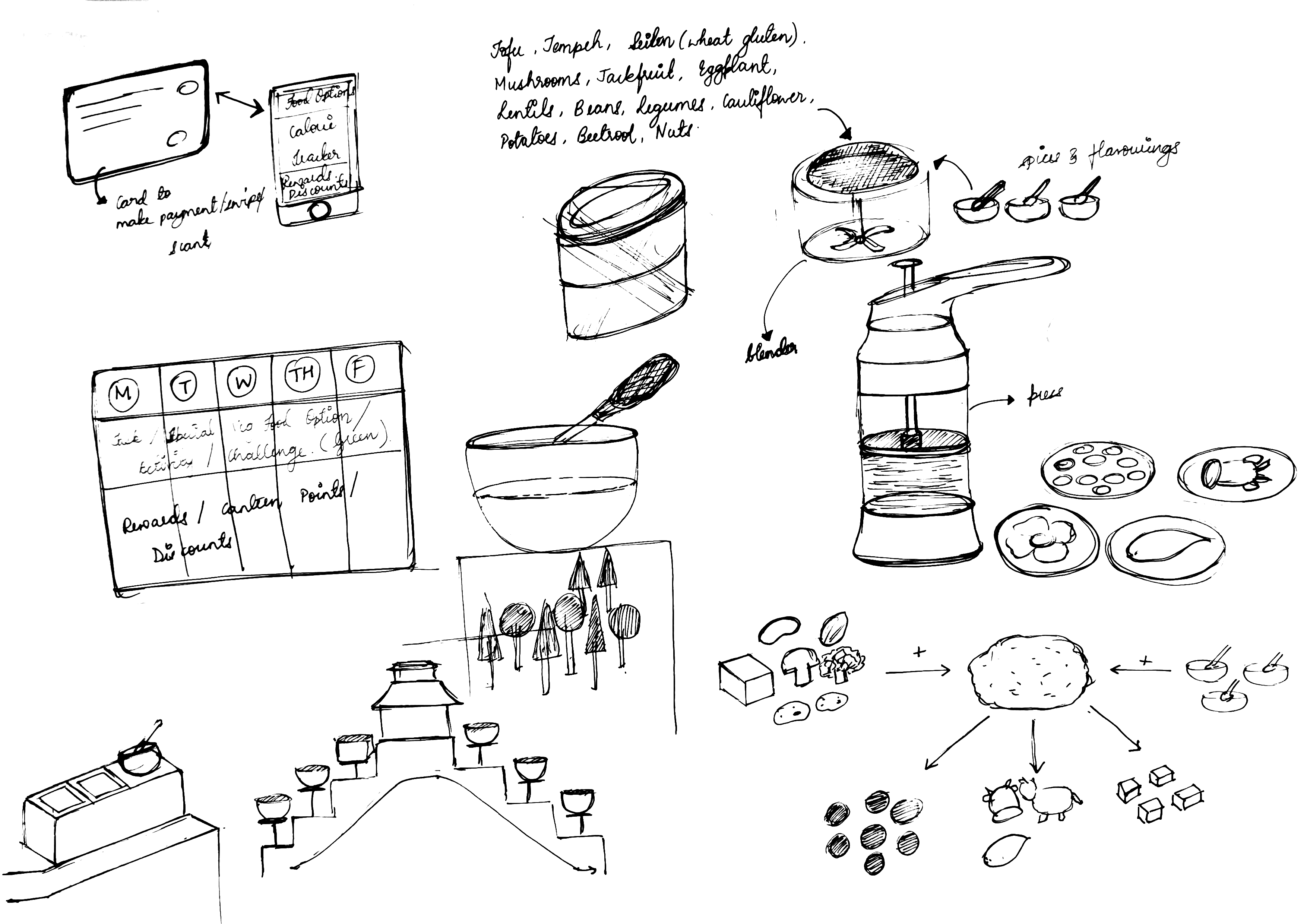
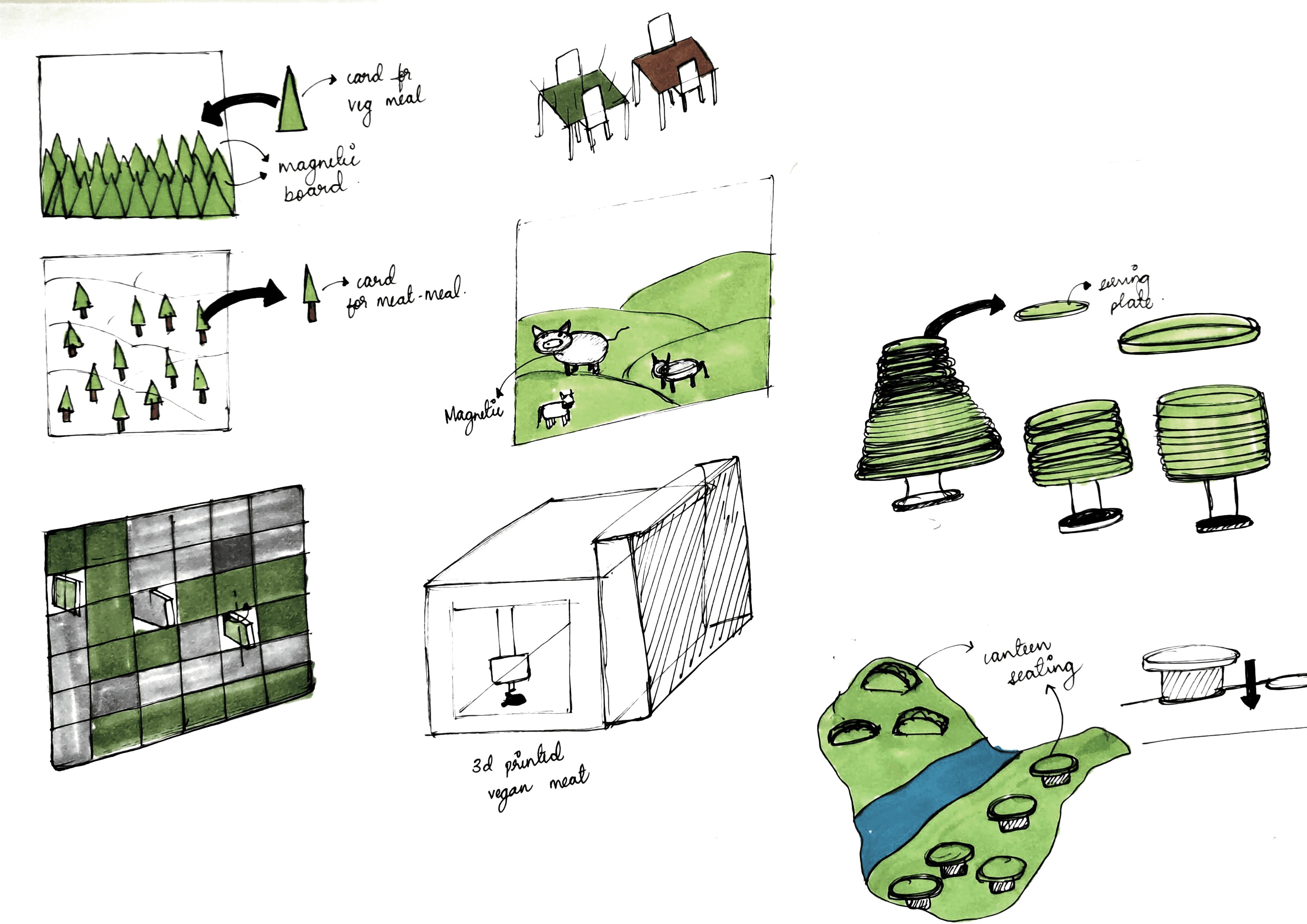
After categorizing the ideas, we re-ideated them. My ideation within these 5 areas is showcased below.
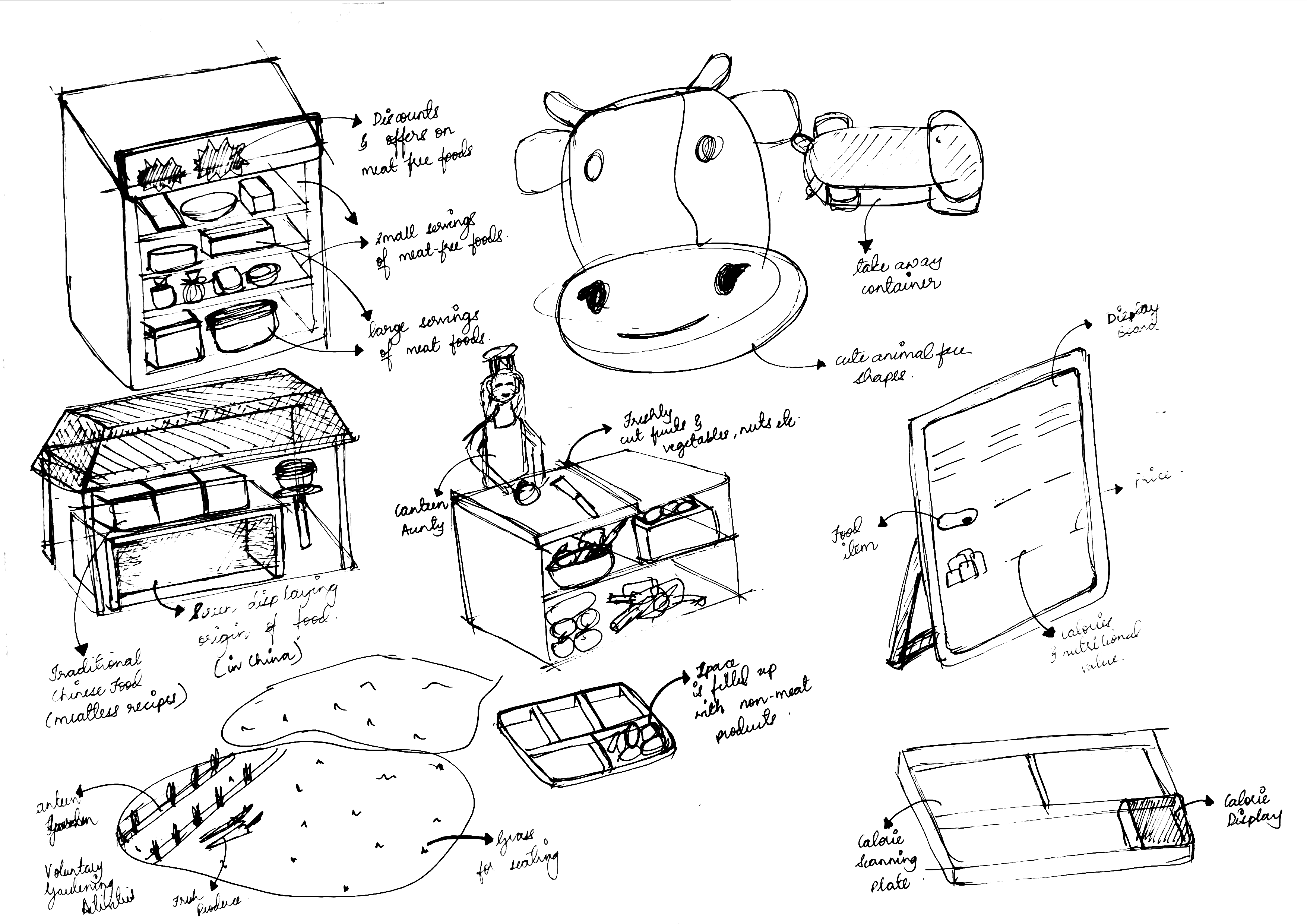
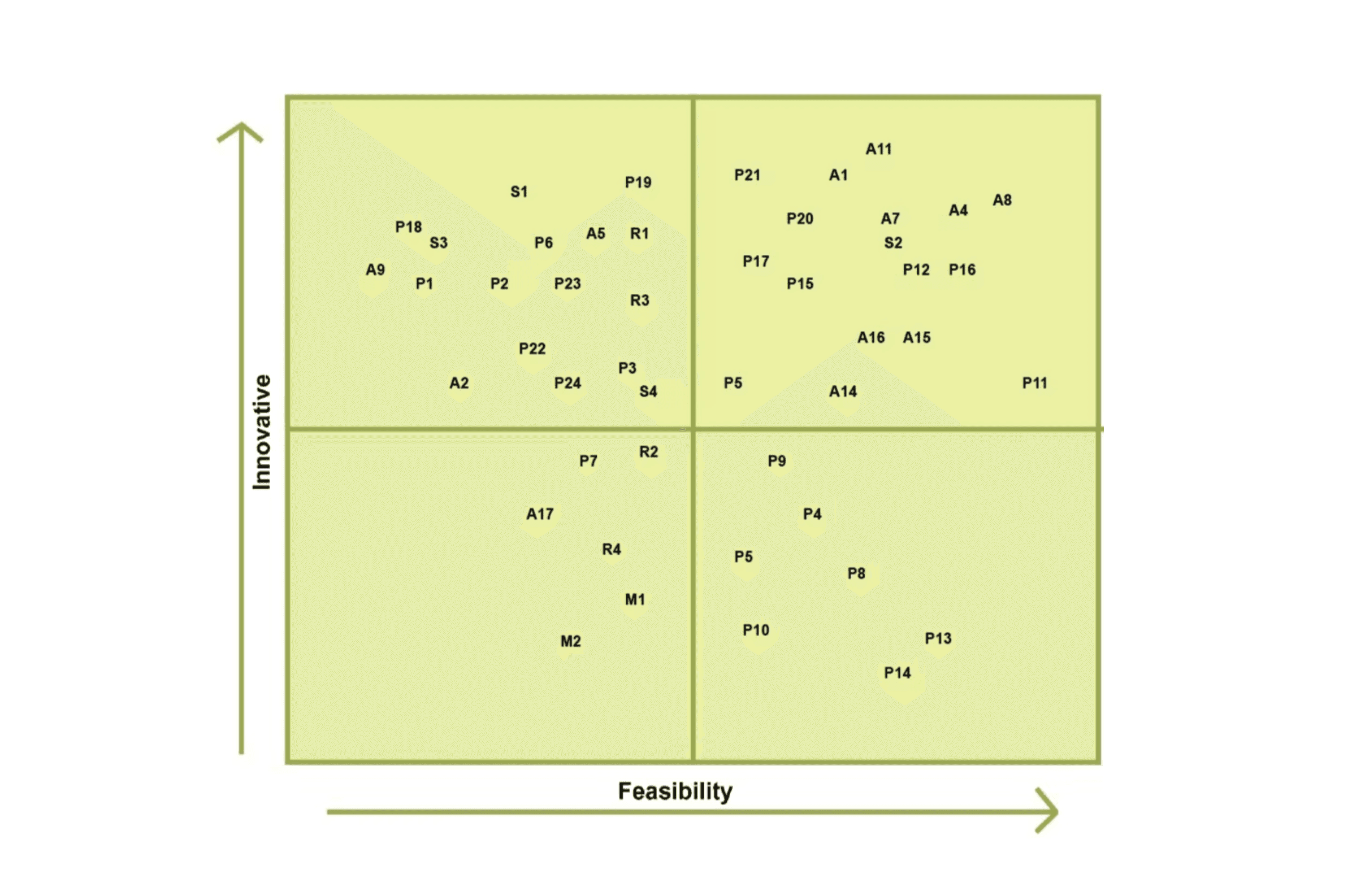
To select the ideas that are most innovative and highly feasible we used C-Box Method. C-Box is a 2x2 matrix in which the two axes represent the criteria according to which the ideas are evaluated. Ideas represented in the 4th quadrant are re-ideated using the SCAMPER method and three concepts are developed.
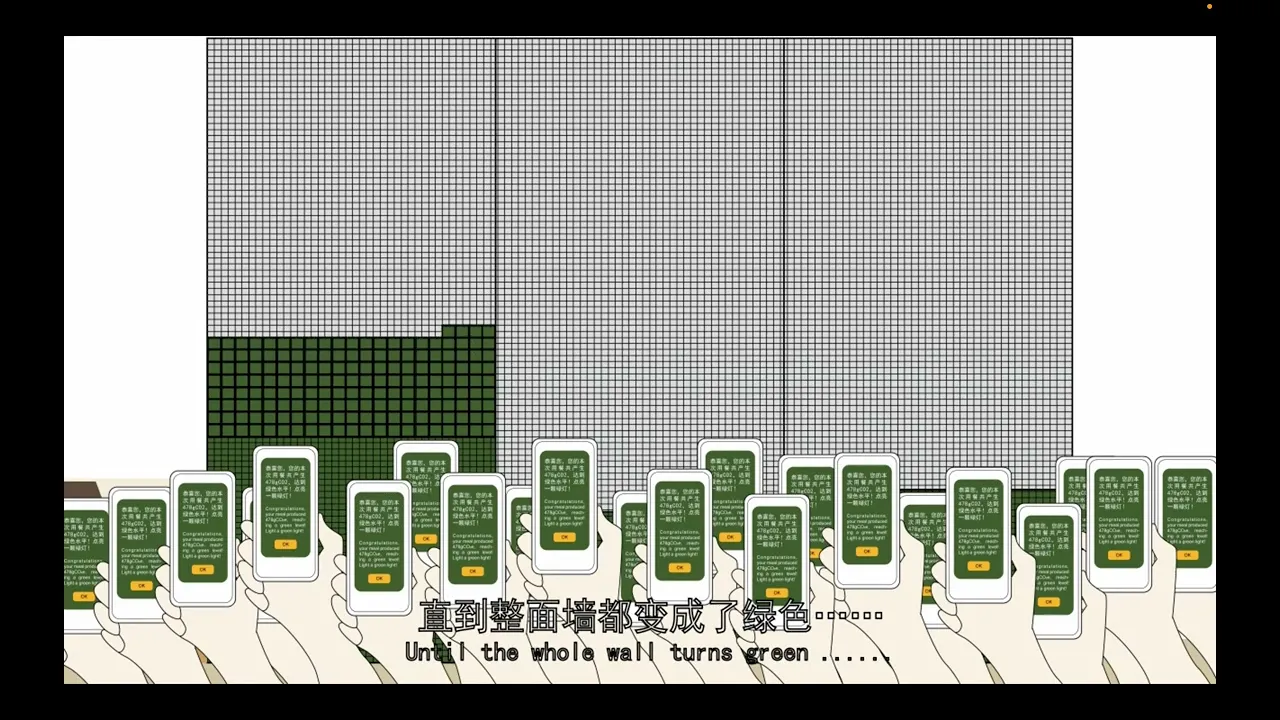
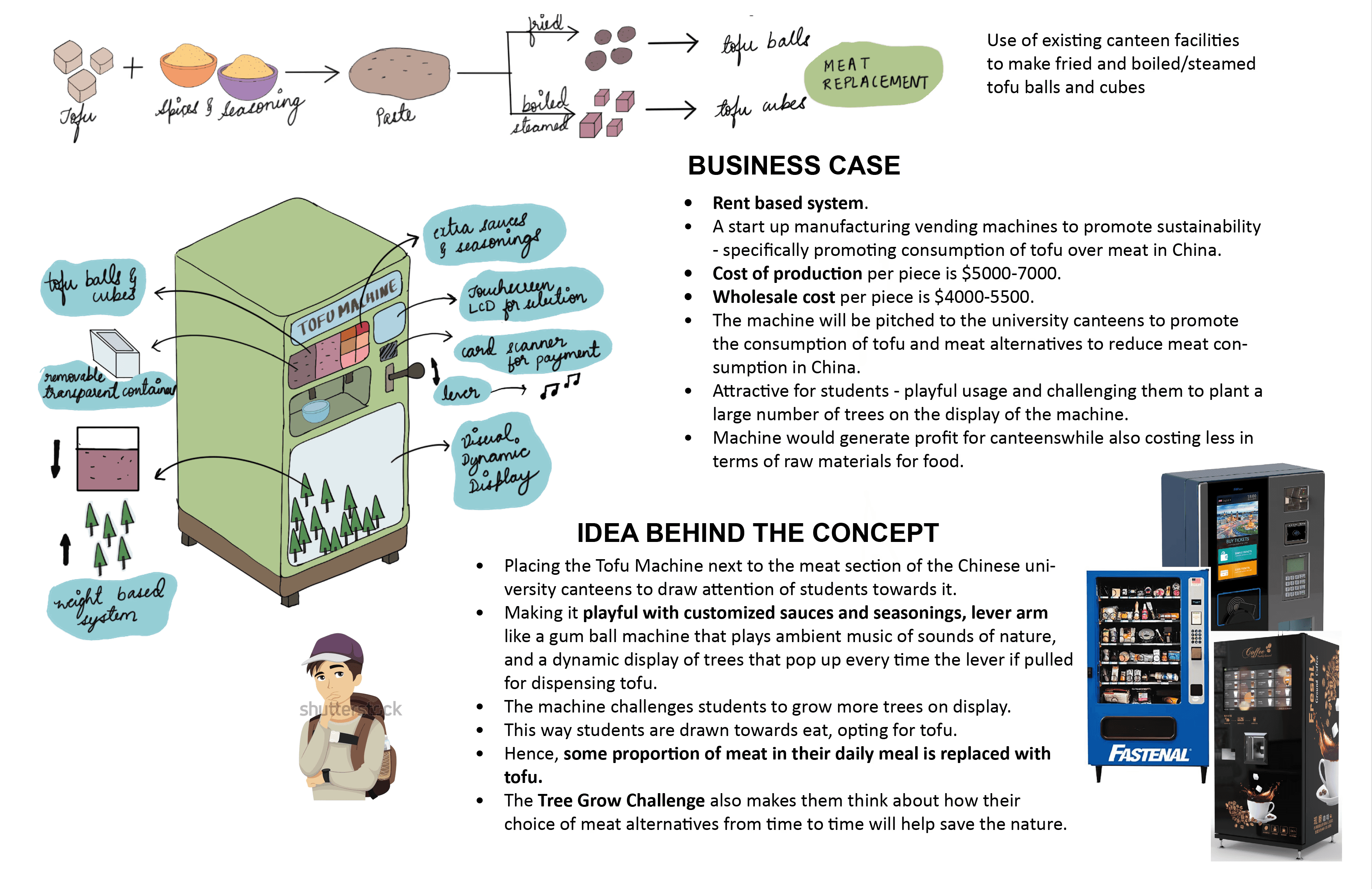
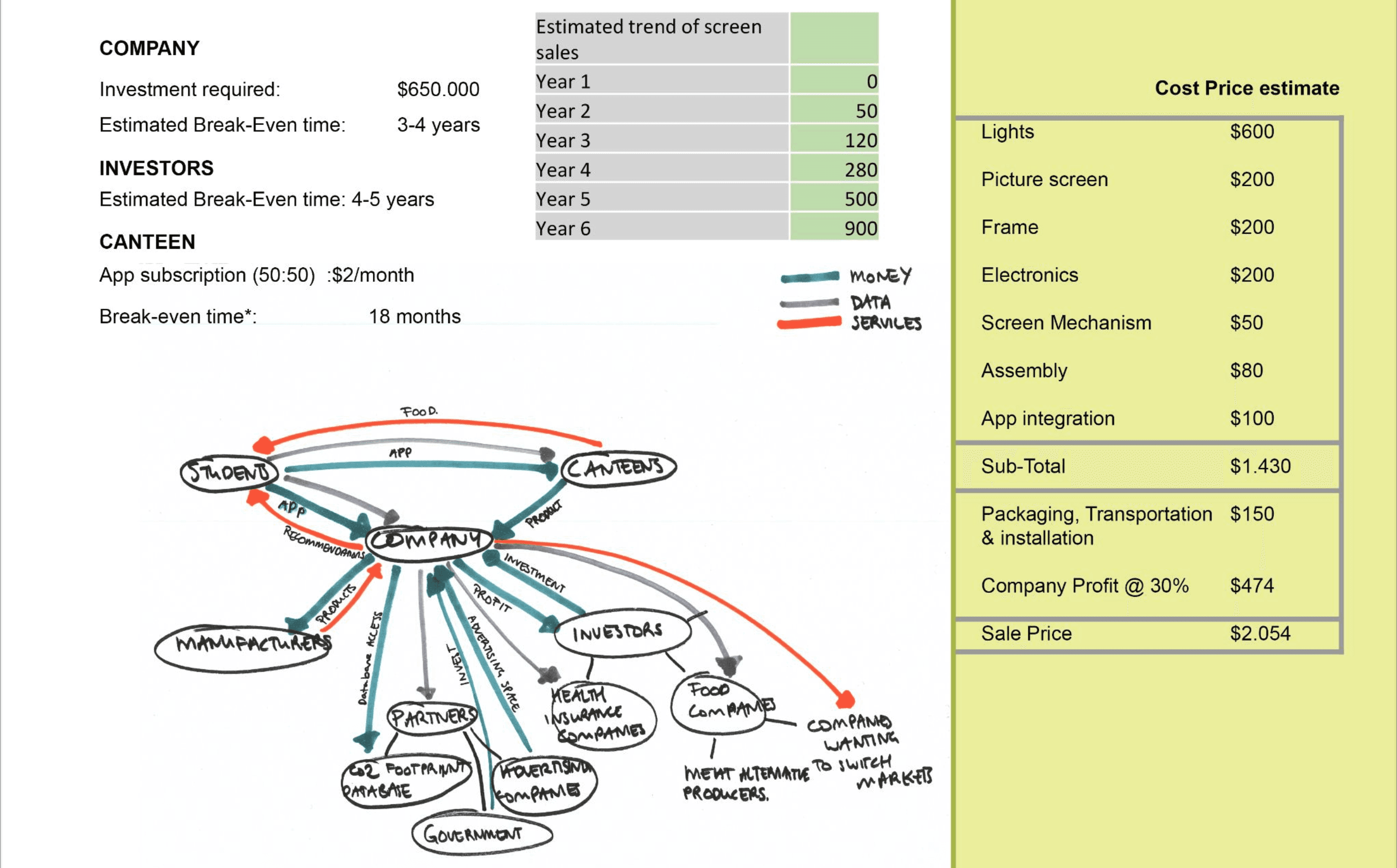
The ideas selected using the C-Box were SCAMPERed and developed into three different concepts for the Chinese canteens. All three concepts were detailed with main idea behind the concept, business case and cost estimation. We selected the most important wishes from our programme of criteria and using the Harris Profile, we evaluated them. After a thorough discussion we decided to further detail the Dynamic Wall concept and include the Canteen Tableware concept in the solution trajectory.
Description
Business Case
Cost Estimation
Description
Business Case
Cost Estimation
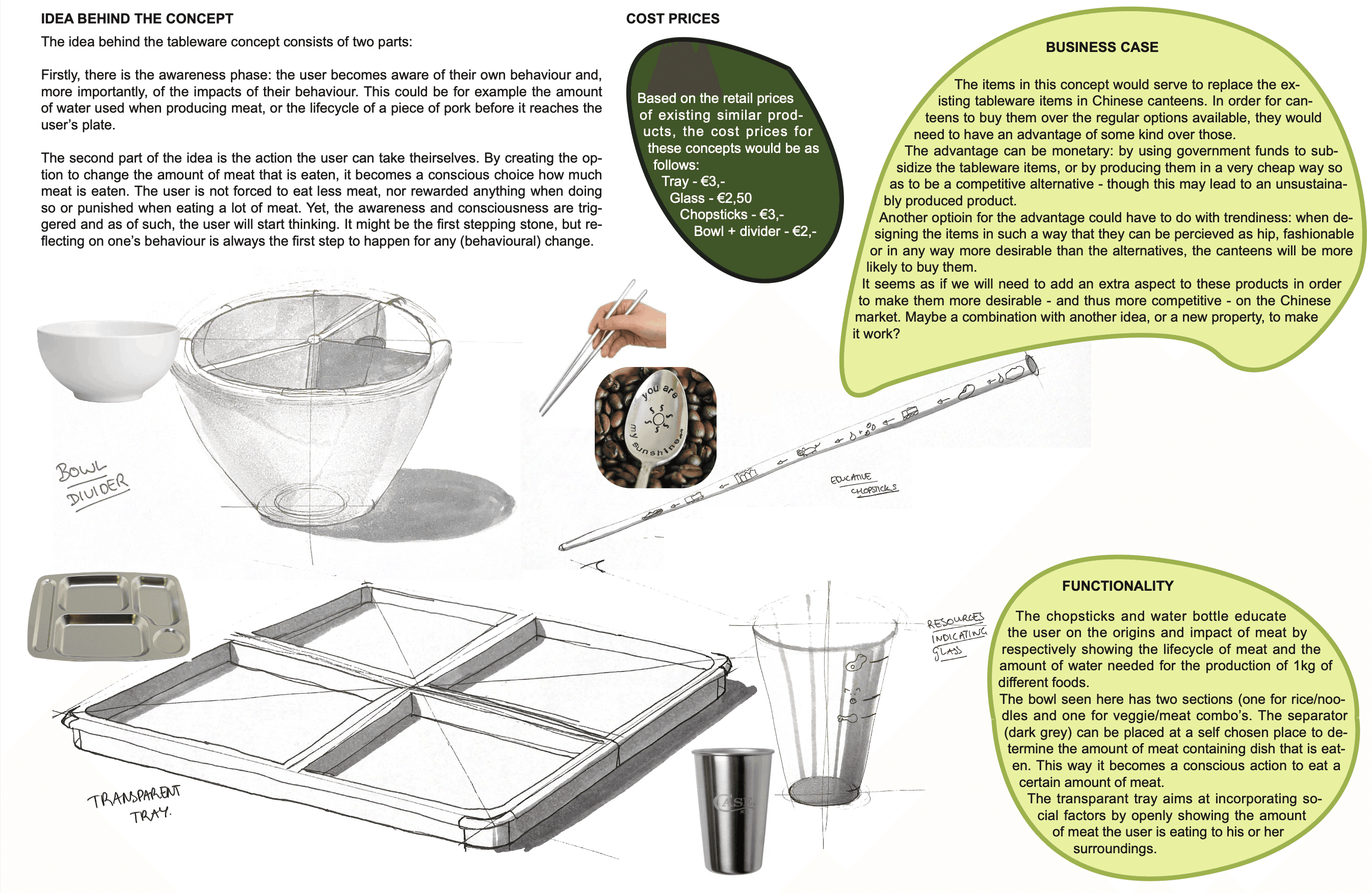
Description
Business Case
Cost Estimation
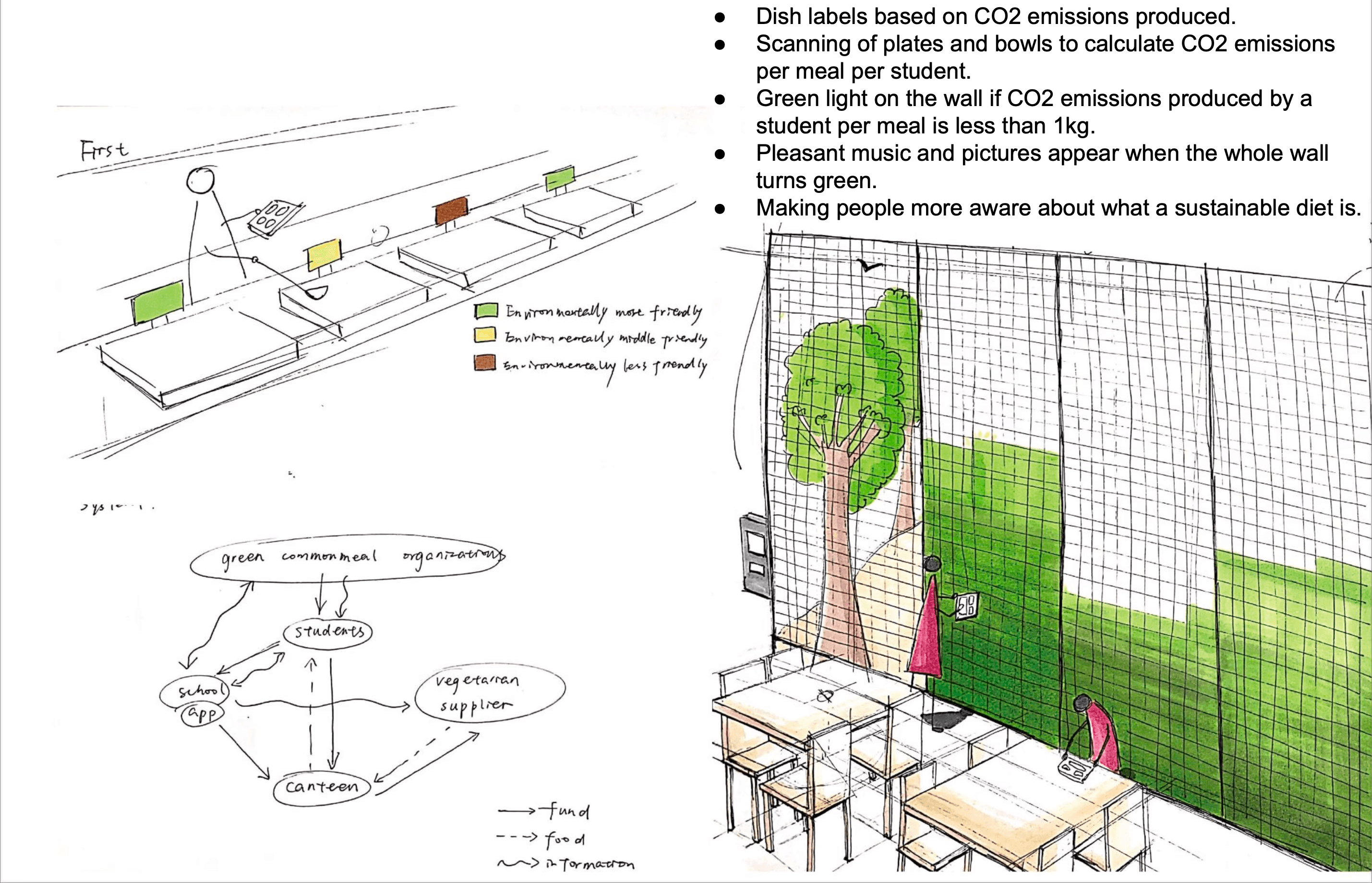
Many specialized food carbon footprint calculators exist. All carbon footprint values consider each stage of the food's lifecycle. This includes the farming processes, food and fertilisers utilised, processing, packaging, transport and more.
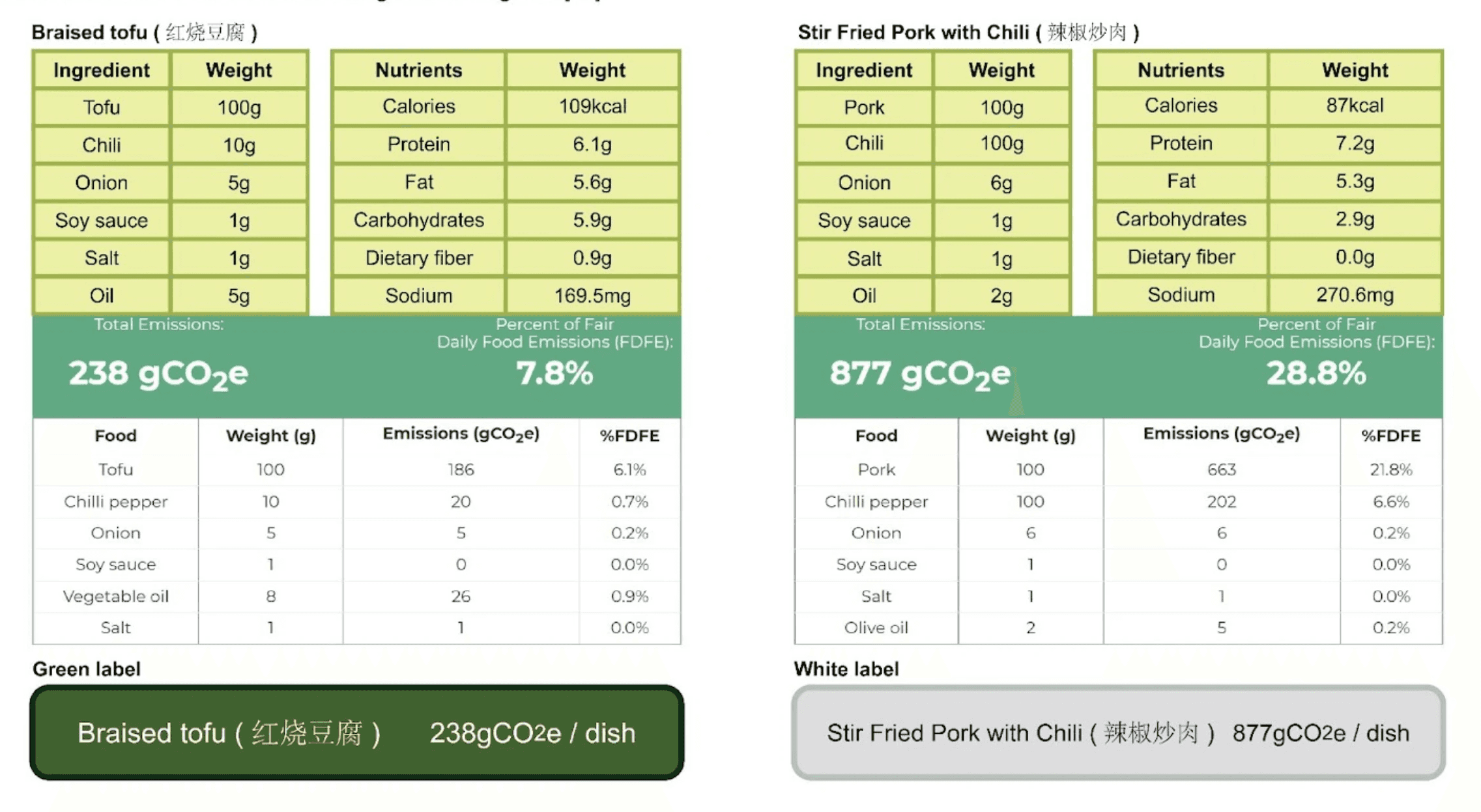
We selected two common Chinese dishes served at the canteen and calculated their carbon footprint values using a calculator. Values of other dishes can also be calculated in the same way. We also categorised the dish labels that will be placed in front of the dishes in the canteen.
Dishes that meet the sustainability standards are labeled in green and the rest in grey. Since a globally fair food emissions value is 3.02kg CO2e/day, we set less than 1kg CO2e/day to be more sustainable. A typical meal per student will have three dishes, so we set the label for dishes that produce less than 300g CO2e/day to be green.
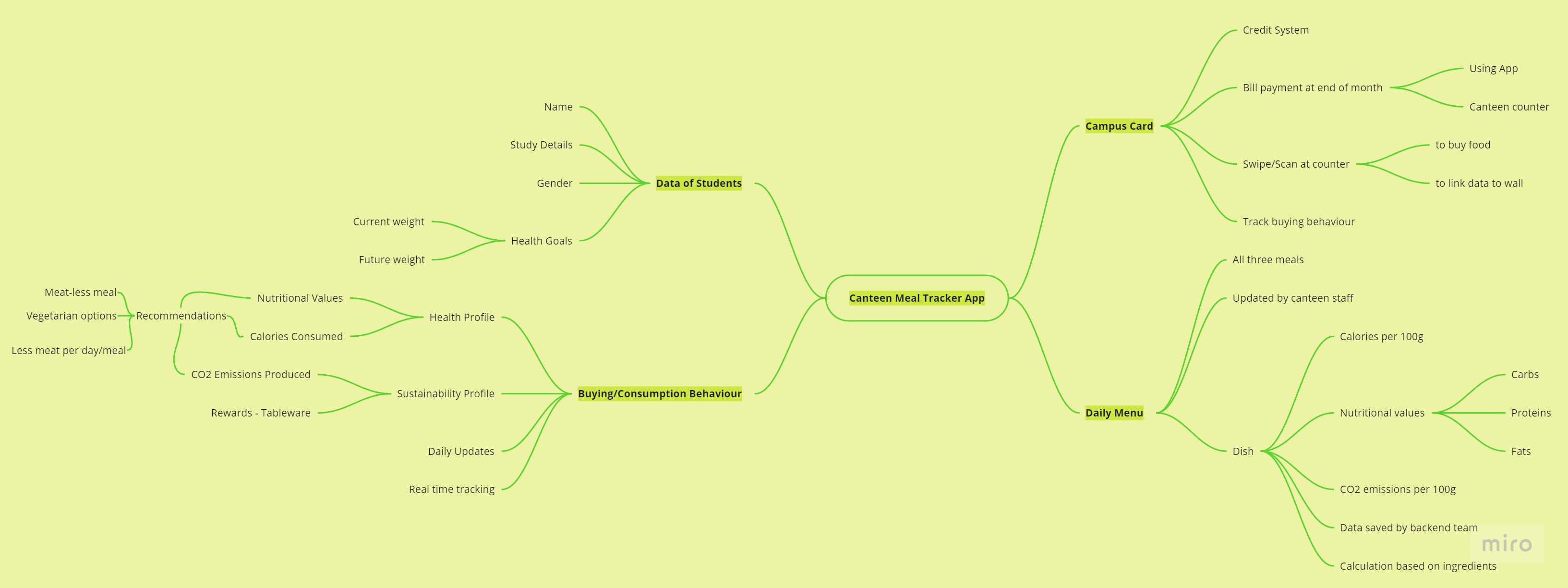
We created a questionnaire to test the users after they watched the the concept video and the app prototype. The results are summarised here.
The participants were mainly people who consume meat everyday and were initially not very aware of the environmental problems caused by meat consumption.
More than half of the participants thought that the dynamic wall design would make them more aware of the need for a more sustainable diet.
Nearly half of the participants were willing to use the app.
20% of the participants would be willing to spend $2/month to subscribe to the app, which exceeds the assumption in our business model that 10% of the students would subscribe to the app.
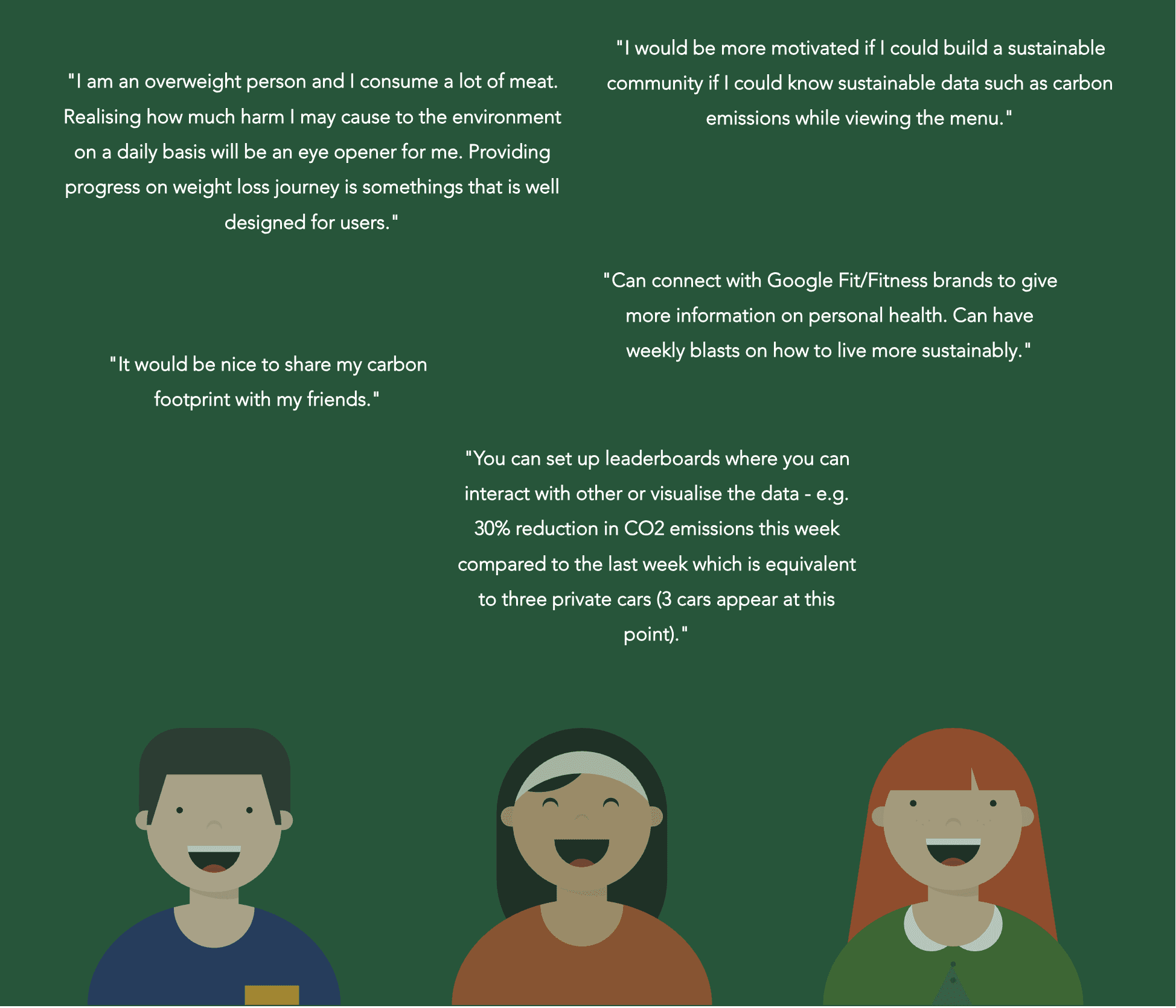
We also received very interesting suggestions to our design solution, some of which are as follows
Record data on body changes.
Build a community where you can share your sustainable achievements.
Connect with Google Fit or other brands.
Visualise data on sustainability.